Wolf Range Burner Maintenance: Keeping That Red Knob Performance Year After Year
Wolf dual-stacked burners deliver restaurant-grade heat — but only when the venturis, igniters, and burner caps are properly cared for. Here's the maintenance routine pros actually follow.
Expert answer
Quick answer for homeowners
A Wolf range that clicks, lights slowly, or produces uneven flames usually needs burner-cap alignment, igniter cleaning, or moisture removal before parts are replaced. Regular cleaning around the burner cap, base, and spark igniter keeps the dual-stacked burner system performing correctly.
- Dry burner parts completely before relighting a Wolf range.
- A clicking igniter often points to moisture or carbon buildup, not an immediate parts failure.
- Use soft brushes and non-abrasive cleaning methods around Wolf porcelain and igniters.
Reviewed for accuracy
Reviewed by Akra Appliance Repair technicians
This guide is reviewed by the Akra Appliance Repair team that services premium appliances across Irvine and Orange County. California-Licensed Appliance Repair · BHGS Reg. #A50034 · EPA 608 Certified · Licensed & Insured. Last updated: August 19, 2025.
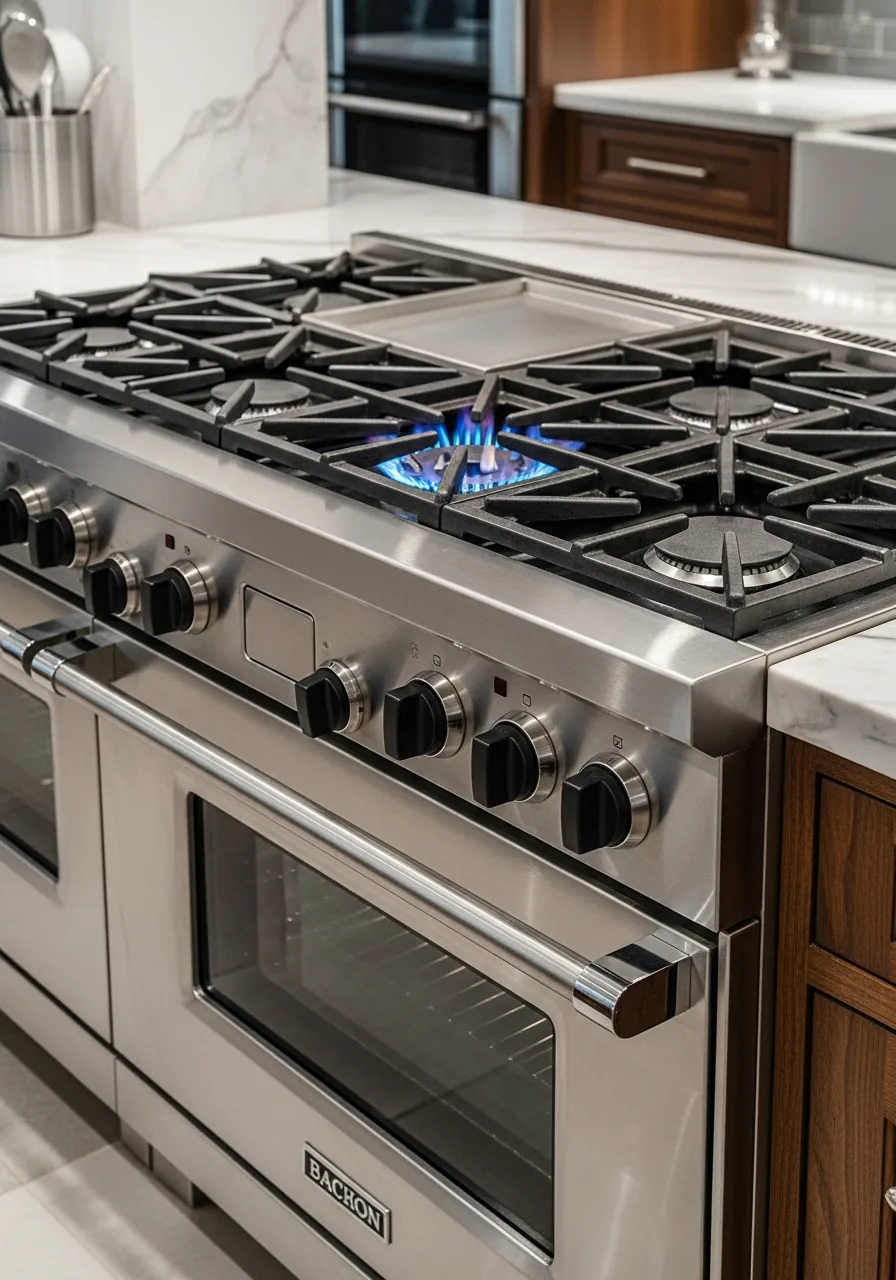
A Wolf range is one of the most thoughtfully engineered cooking appliances ever sold to consumers. The dual-stacked sealed burners give you a true simmer below 500 BTU and a hard sear above 20,000 BTU on the same burner — but that performance depends entirely on three small parts staying clean: the burner cap, the burner base, and the spark igniter. Neglect any of them and your $12,000 range starts behaving like a mid-tier builder-grade appliance.
Here is the maintenance routine our Wolf-trained techs recommend to Orange County homeowners. None of it is difficult, but the order matters and a few common mistakes can damage parts that Wolf does not sell cheap.
Daily and Weekly Care
After every cooking session, wipe the cooktop with a damp microfiber once the surface has cooled. Spills that bake onto the porcelain are far harder to remove later, and burnt sugar in particular will etch the finish if left overnight. Avoid abrasive pads — Wolf's porcelain enamel is durable but it is still glass-based and scratches will telegraph forever.
Once a week, lift the burner caps and burner bases off and check the small port holes around the perimeter of the base. These ports are where the gas-air mixture emerges to be ignited. A toothpick or a sewing needle clears any clogged port in seconds. Never use a wire brush — the brass softens and you will enlarge the port permanently.
Monthly Deep Clean
- Turn off the gas at the range valve and confirm all knobs are in the off position.
- Lift off the cast-iron grates and the burner caps. Set them aside on a towel.
- Lift the burner bases off — they sit on locating pins and come up with no tools.
- Soak the caps and bases in warm soapy water for 15 minutes. Use a soft brush, not steel wool.
- While they soak, wipe the burner well underneath with a damp cloth. Do not let water drip into the burner orifice in the center.
- Dry every part completely before reassembly. Water trapped under a burner cap is the #1 cause of igniters that click but will not light.
- Reseat the base, then the cap, then the grate. The cap should sit flat — if it rocks, the ports are not aligned with the base.
Wolf igniters are ceramic-tipped piezo elements. They will spark wet, but the spark grounds out through the moisture instead of jumping to the burner cap. Owners then assume the igniter has failed and call for service. In four out of five 'igniter not working' calls we run on Wolf ranges, the actual fix is letting the burner dry for an hour.
The Igniter Click Problem Everyone Asks About
If a single burner clicks continuously even after you turn the knob off, the spark module is reading moisture or carbon buildup as a grounded condition. Pull the cap, dry the area thoroughly with a hairdryer on low, and clean any dark carbon deposits off the igniter tip with a soft toothbrush. If the clicking continues after a full dry, the spark module under the cooktop is failing and needs to be replaced — that is a tech call.
Grate Care
Wolf cast-iron grates are matte porcelain coated and can go in the dishwasher, but the high-pH detergents will dull the finish over time. We recommend hand washing with dish soap and a soft brush, then drying immediately to prevent water spots. If your grates have lost their matte black look and gone slightly gray, that is detergent etching, not normal wear — switch to hand washing going forward.
Annual Professional Service
Once a year, have a Wolf-trained tech pull the cooktop and inspect the manifold connections, regulator pressure, and burner orifice sizing. Orange County's natural gas supply pressure varies enough between neighborhoods that the original original orifice sizing is not always optimal — particularly in older homes in Anaheim and Santa Ana where line pressure runs higher than spec. A properly tuned Wolf burner has a crisp blue flame with no yellow tipping; if yours has any yellow at all, you are wasting fuel and depositing carbon on every pan.
Common Mistakes That Shorten Burner Life
We see the same handful of avoidable mistakes on service calls across Orange County. Avoid these and your burners will outlast the rest of your kitchen. First, never spray cooktop cleaner directly on a burner. The liquid runs under the cap, soaks into the spark module wiring, and creates the moisture problem we just discussed — except this version takes weeks to dry out. Always spray the cloth, then wipe. Second, do not slide heavy cast-iron pans across the grates. The grate coating is durable but it is not indestructible, and a 12-inch Le Creuset dragged across it leaves a permanent scuff. Lift, do not drag.
Third, do not run a burner on high with an empty pan to 'burn off' spills. The thermal stress on the cast-iron grate and the burner cap can warp both. If you have a stubborn spill, soak it off — do not torch it off. Fourth, replace the cooktop drip pans (if your model has them) when they discolor heavily. Heat reflection off a clean drip pan is part of how Wolf hits its claimed BTU output at the cookware; a soot-blackened pan reduces efficiency measurably.
Akra Appliance Repair's Wolf preventive maintenance visit covers all of the above plus a full safety check on the gas connections. Call (949) 666-8689 to schedule yours.
Expert FAQ
Why does my Wolf range keep clicking after cleaning?
The most common reason is moisture around the igniter or burner base. Dry the area thoroughly and make sure the burner cap is seated flat before calling for service.
What causes uneven flames on a Wolf burner?
Uneven flames usually come from a misaligned burner cap, clogged burner ports, or debris around the burner base. If cleaning and reseating do not fix it, the burner or gas supply should be checked.
How often should a Wolf range get professional maintenance?
For high-use kitchens, annual service is a good cadence. A technician can check gas connections, burner performance, igniters, and regulator pressure.
Related repair pages
Use these internal links to continue from this expert guide to the matching service, brand, location, promotion, and scheduling pages.
More From the Blog
Miele Dishwasher Filter Care: The 5-Minute Habit That Doubles Pump Life
Extending the Life of Your Viking Refrigerator: A 12-Year Maintenance Plan
Beverage Cooler Temperature and Condensation: What to Check
Sub-Zero Ice Maker Not Working? The 7-Point Diagnostic We Run Before Replacing Anything
Wolf Oven Not Heating Evenly? Here's What's Actually Going On