Viking Refrigerator Has Warm Spots? Here Are the 5 Causes We See Most
If one shelf of your Viking is cold and another is warm, the unit is telling you something specific. Here are the five causes ranked by how often we see them.
Expert answer
Quick answer for homeowners
Viking refrigerator warm spots usually come from restricted airflow, evaporator fan problems, defrost failure, door-gasket leaks, a stuck damper, or a sealed-system issue. A 24-hour thermometer test across multiple shelves can quickly show whether the problem is airflow, defrost, or general cooling performance.
- Warm upper shelves often point to airflow or evaporator fan trouble.
- Frost on the back wall usually means the defrost system needs diagnosis.
- Turning the thermostat colder will not fix a true warm-spot problem.
Reviewed for accuracy
Reviewed by Akra Appliance Repair technicians
This guide is reviewed by the Akra Appliance Repair team that services premium appliances across Irvine and Orange County. California-Licensed Appliance Repair · BHGS Reg. #A50034 · EPA 608 Certified · Licensed & Insured. Last updated: September 30, 2025.
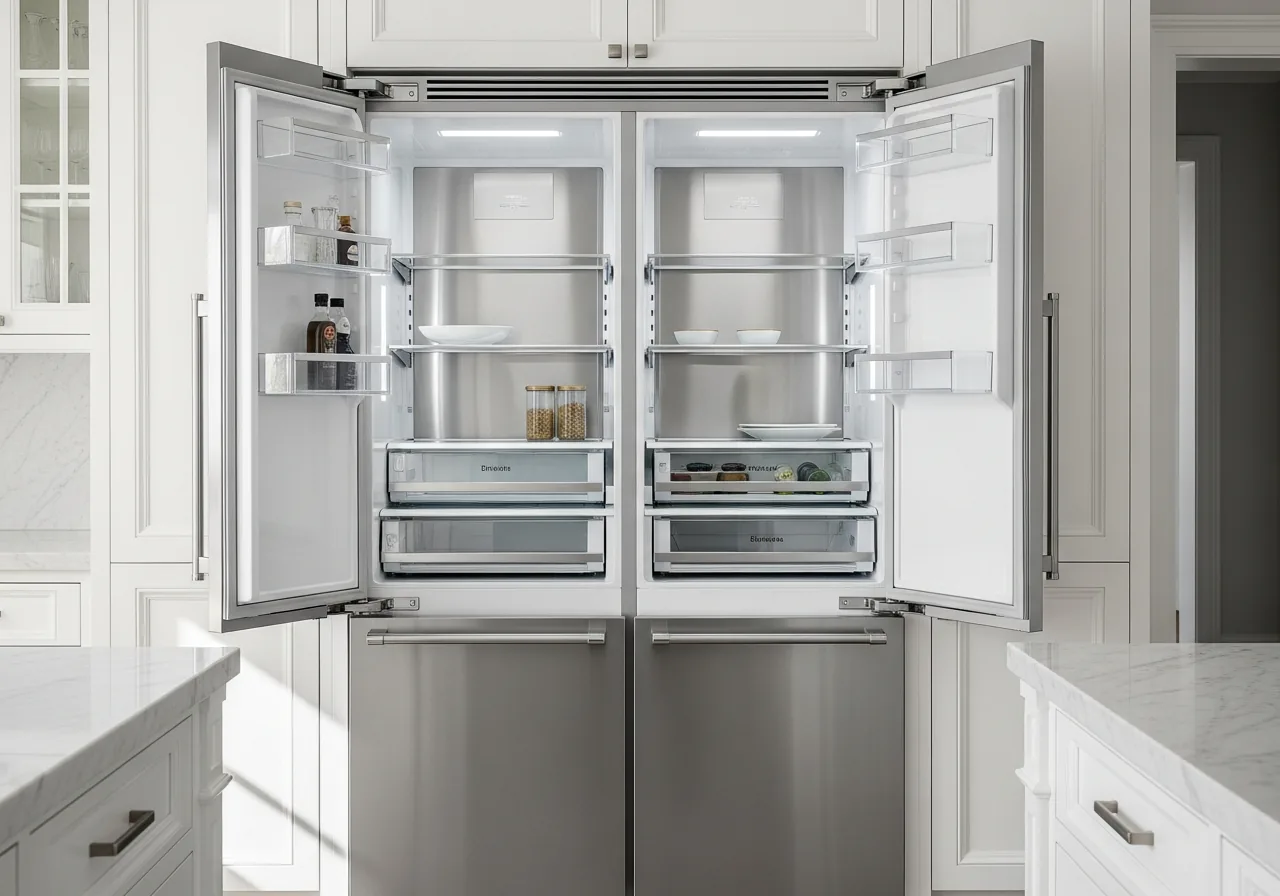
When a Viking refrigerator develops warm spots — milk going off on the top shelf while produce stays cold below, or vice versa — the unit is communicating a specific failure mode. Unlike total cooling loss, partial cooling problems narrow the diagnosis quickly. Here are the five causes we see most often, in order.
1. Evaporator Fan Failure or Restriction
Most common by a wide margin. The evaporator fan pulls cold air from the freezer-side coil and pushes it through the duct system into the fresh-food compartment. If the fan slows, fails, or is partially blocked by ice buildup, airflow drops and the upper shelves (farthest from the air outlet) warm first. Listen at the back of the unit during operation — a chirp, squeal, or silence where you should hear airflow is diagnostic.
2. Defrost System Failure (Ice on Back Wall)
Pull everything off the back wall of the fresh-food compartment and look. If you see frost or ice buildup, the defrost heater, defrost thermostat, or defrost timer/board has failed and the evaporator is over-icing. The ice physically blocks airflow through the coil, which kills cooling delivery to the upper sections. This is a tech repair but it is straightforward once diagnosed.
3. Door Gasket Leak
On a Viking built-in, the door is heavy and the gasket has to work hard. Around year 7-9 we see gaskets that have compressed unevenly or torn at a corner. Symptom: condensation on the inside of the door, ice or frost near the leak point, and warm spots in the area closest to the failed seal. The dollar-bill test (close the door on a bill, try to pull it out) tells you immediately. New gaskets are $200-$300 installed.
4. Damper Door Stuck
Vikings use a motorized damper between the freezer and the fresh-food compartment to regulate airflow. If the damper is stuck partially closed, the fresh-food compartment runs warm everywhere; if stuck open, it runs cold everywhere and the freezer warms. A damper that hunts (opens and closes erratically) produces shifting warm spots. The damper motor is a $250 part and a moderate-difficulty repair.
5. Refrigerant Charge Issue
Least common but most serious. A slow refrigerant leak reduces cooling capacity. The unit will still run constantly and the freezer often still freezes, but the fresh-food compartment can no longer hold setpoint, especially during warm-weather peaks. This requires sealed-system work by an EPA-certified tech and the leak source has to be found and brazed before recharging. Refrigerant top-offs without leak repair are a waste of money.
Put probe thermometers on the top shelf, middle shelf, and bottom shelf. Run the unit for 24 hours undisturbed. If the spread is more than 6°F, you have a real airflow or sealed-system issue — not just a stocking problem. Bring those numbers to your service call; they help us diagnose in fewer steps.
What Not to Do
Do not just turn the thermostat colder. It will make the freezer too cold (and freeze your ice cream solid) without fixing the warm spot. Do not block the air vents inside the fresh-food compartment by overstocking — Viking units especially need airflow clearance around the rear and side vents to circulate properly.
The 24-Hour Self-Test Before You Call
Service calls go faster (and cost less) when you arrive with data. Before scheduling, run this simple 24-hour test. Place three appliance thermometers in the fresh-food compartment: one on the top shelf at the back, one on the middle shelf in the center, and one in the bottom drawer. Place a fourth in the freezer for reference. Do not open the unit for 24 hours. Read all four temperatures and write down the highest, lowest, and the spread between them. Note whether the warm spot is consistent in one location or whether it moves around throughout the day.
This data tells a tech enormous amounts in the first five minutes. A consistent top-of-compartment warm spot points to airflow or the damper. A wandering warm spot points to a defrost cycle or thermostat issue. A general warm bias with the freezer running fine points to the damper. A general warm bias with the freezer also slightly warm points to refrigerant or condenser. The fix is the same either way, but the diagnostic path is faster — which means a one-visit repair instead of a two-visit repair.
Stocking Patterns Worth Reviewing
Many Viking warm-spot complaints turn out to be airflow blockage from how the unit is stocked. Tall cereal boxes against the back wall block the air outlet. Costco-sized condiment platoons crammed onto the door shelves block the door cooling vents. Even a perfectly working Viking will develop warm spots if cold air cannot circulate. Before scheduling service, pull everything out, vacuum any debris from the air outlets, and restock with at least 1 inch of clearance around every vent. If the warm spot goes away within 12 hours, you saved yourself a service call.
Akra Appliance Repair services Viking refrigeration problems across Irvine and Orange County with model-specific diagnostic steps and parts matched to the approved repair when available. Call (949) 666-8689.
Expert FAQ
Why does my Viking refrigerator have warm spots?
Warm spots are commonly caused by a weak evaporator fan, frost blocking airflow, a leaking door gasket, a stuck damper, or reduced sealed-system performance.
How do I test Viking refrigerator warm spots before calling?
Place thermometers on the top, middle, and lower shelves for 24 hours without frequent door openings. A spread greater than about 6°F suggests a real airflow or cooling issue.
Is a Viking refrigerator warm spot a serious repair?
It depends on the cause. Gasket, fan, and damper repairs are often straightforward; sealed-system problems are more serious and require EPA-certified service.
Related repair pages
Use these internal links to continue from this expert guide to the matching service, brand, location, promotion, and scheduling pages.
More From the Blog
Miele Dishwasher Error Codes Explained: F11, F12, F14, F18 and What They Actually Mean
Sub-Zero vs Thermador Built-In Refrigerators: An Honest Comparison From the People Who Repair Both
Wolf vs Viking Ranges: Which One Should You Repair, and Which One Should You Replace?
Sub-Zero Refrigerator Not Cooling? What to Check Before Food Spoils
Wolf Range Burner Clicks but Won't Light? The Usual Causes