Beverage Cooler Temperature and Condensation: What to Check
Temperature swings, condensation, and continuous running can point to airflow, door-seal, drainage, or cooling-system problems. Start with these practical checks.
Expert answer
Quick answer for homeowners
A beverage cooler should hold the temperature selected for the stored drinks without persistent swings, excess condensation, or continuous running. Ongoing problems can point to a gasket, drain, airflow, sensor, defrost, or cooling-system issue.
- Compare the control setting with an independent thermometer before assuming the display is accurate.
- Door-seal and ventilation problems can cause temperature swings and condensation.
- Water, frost, fan noise, or continuous running can signal a mechanical issue.
Reviewed for accuracy
Reviewed by Akra Appliance Repair technicians
This guide is reviewed by the Akra Appliance Repair team that services premium appliances across Irvine and Orange County. California-Licensed Appliance Repair · BHGS Reg. #A50034 · EPA 608 Certified · Licensed & Insured. Last updated: September 9, 2025.
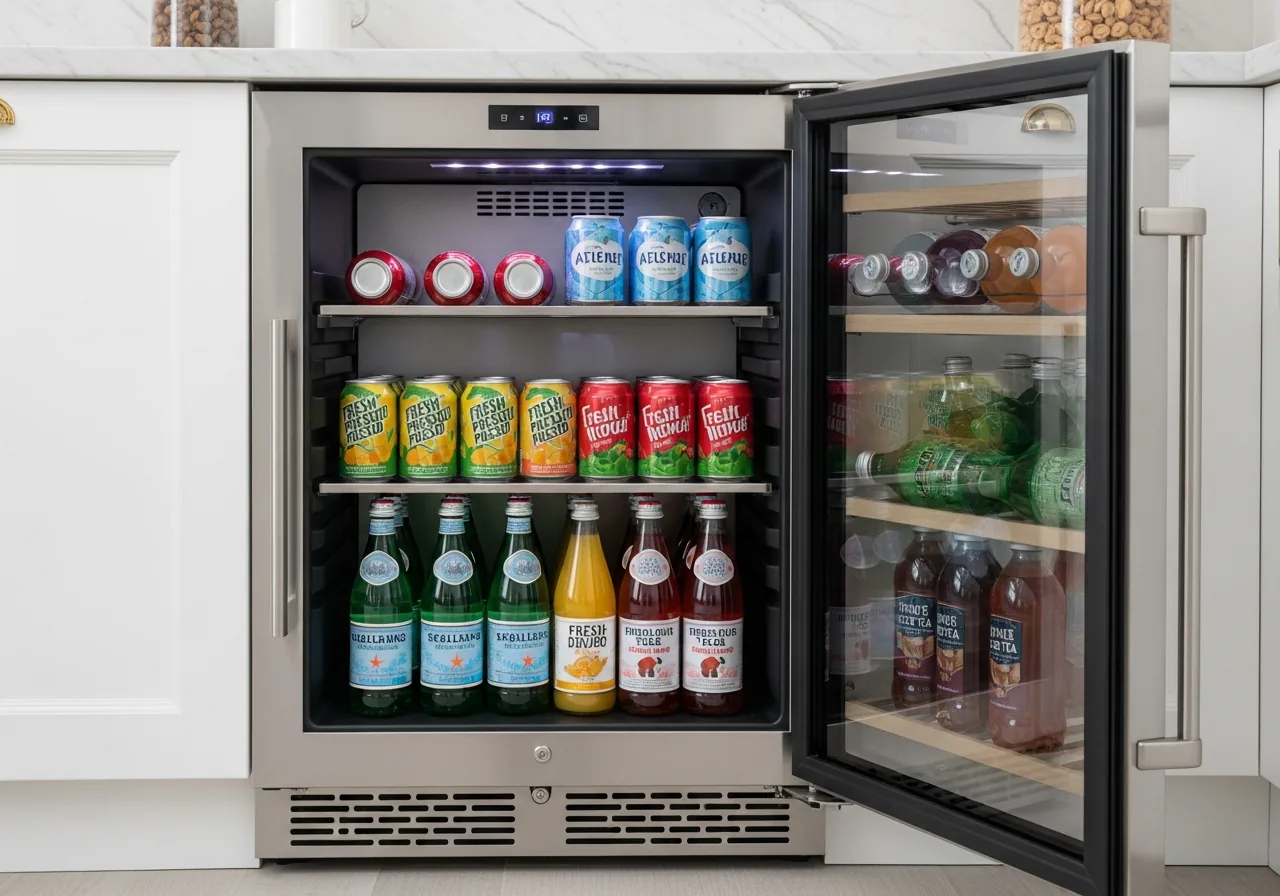
A built-in beverage cooler should hold a stable temperature without persistent condensation, frost, or continuous running. When performance changes, the cause may be as simple as a blocked grille or door-seal problem, but it can also involve a fan, sensor, drain, control, or refrigeration component.
Confirm the Actual Temperature
Start with the temperature range specified for the model and the drinks being stored. Place an independent appliance thermometer near the center of the cabinet and allow the unit time to stabilize after loading or frequent door opening. A display that looks normal does not always reflect the temperature throughout the cabinet.
Common Causes of Temperature Swings
1. Door-seal or alignment problems
A gasket that is torn, hardened, dirty, or not contacting the cabinet evenly lets room air enter. Check the full perimeter for gaps and confirm that shelves or containers are not preventing the door from closing completely.
2. Restricted ventilation
Undercounter refrigeration needs the cabinet clearances and ventilation path specified by the manufacturer. A blocked front grille, dust on the condenser, or heat trapped in a tight opening can increase run time and make temperature recovery slower.
3. Fan, sensor, or control concerns
An evaporator fan that slows or stops can create warm and cold zones. A temperature sensor or control problem can also cause short cycling, continuous running, or a mismatch between the display and the cabinet temperature.
Why Condensation Appears
Some moisture can appear after the door has been open or when humid room air enters the cabinet. Persistent water, heavy condensation, or frost deserves a closer look because it can indicate:
- A door gasket that is leaking or a hinge that is out of alignment.
- A restricted drain that is allowing condensate to remain in the cabinet.
- Frequent door opening or warm containers added before they have cooled.
- An airflow, defrost, sensor, or cooling-cycle problem.
Checks You Can Make Before Scheduling Service
- Confirm the selected setting and compare it with an independent thermometer.
- Make sure the door closes fully and inspect the gasket for gaps or damage.
- Clear the front grille and keep required ventilation openings unobstructed.
- Check for water near the drain area and document where condensation or frost appears.
- Record any error code, new fan noise, or change in compressor run time.
Request service when the cabinet remains outside the selected range after basic airflow and door checks, or when you see recurring water, frost, error codes, fan noise, or continuous running. Share the model and observed temperatures so the technician can prepare for the visit.
Placement and Ambient Conditions
Room temperature, nearby heat sources, direct sunlight, and cabinet ventilation all affect how hard an undercounter cooler must work. If performance changed after remodeling, moving the unit, or installing a new panel, compare the opening and clearances with the manufacturer's installation instructions.
If the unit continues to drift after basic door-seal and ventilation checks, document the temperature pattern, condensation location, and any sounds or codes, then consult a qualified refrigeration technician familiar with the specific model.
Expert FAQ
What temperature should a beverage cooler maintain?
Use the range specified for the model and the drinks being stored. If the cabinet remains several degrees away from the selected setting after normal stabilization, check airflow, the door seal, ventilation, and condenser condition.
Why is my beverage cooler forming condensation?
Condensation can come from frequent door opening, a leaking gasket, a door that is out of alignment, humid room air, a blocked drain, or an abnormal cooling cycle.
When does a beverage cooler need professional evaluation?
Professional evaluation is appropriate when temperature remains unstable after basic airflow and door-seal checks, or when the unit shows water, frost, fan noise, error codes, or continuous running.
Related repair pages
Use these internal links to continue from this expert guide to the matching service, brand, location, promotion, and scheduling pages.
More From the Blog
Sub-Zero Ice Maker Not Working? The 7-Point Diagnostic We Run Before Replacing Anything
Wolf Oven Not Heating Evenly? Here's What's Actually Going On
Viking Refrigerator Has Warm Spots? Here Are the 5 Causes We See Most
Miele Dishwasher Error Codes Explained: F11, F12, F14, F18 and What They Actually Mean
Sub-Zero vs Thermador Built-In Refrigerators: An Honest Comparison From the People Who Repair Both